
How to Plan Temporary Workforce Housing for Large Construction Projects
December 10, 2025
Turnkey Workforce Camps vs. Hotel Accommodations: A Cost-Benefit Analysis
January 22, 2026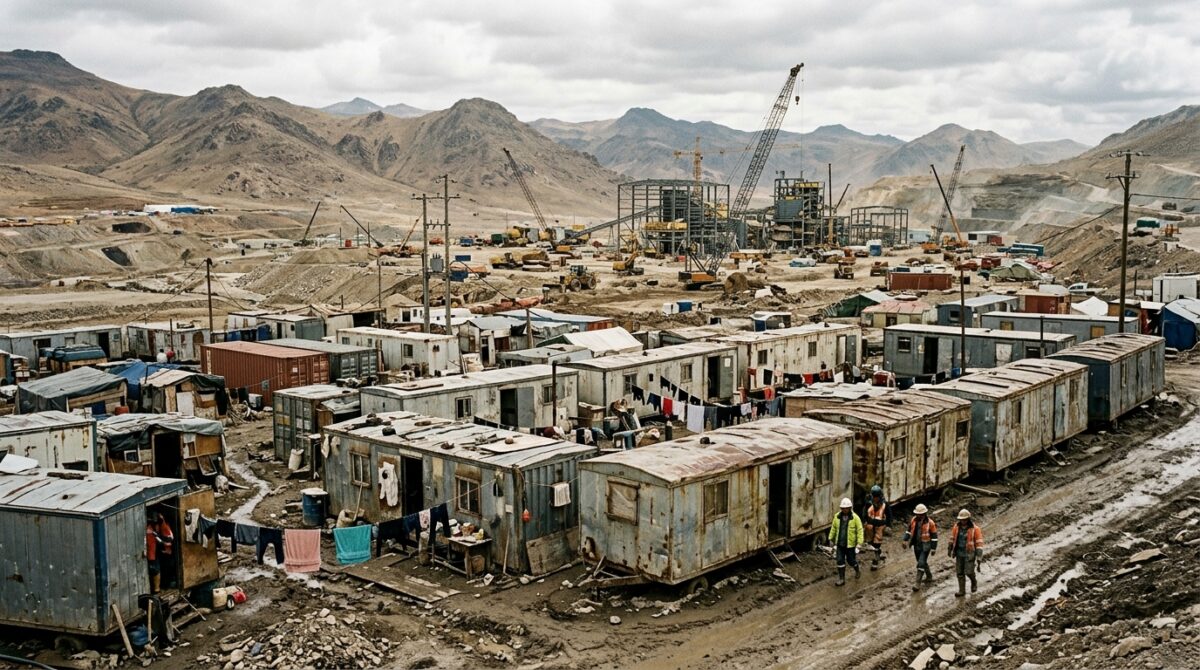
When project managers look at workforce accommodation as a line item to minimize, they often trigger a cascade of hidden costs that dwarf the savings. Poor worker housing doesn’t just affect morale—it measurably impacts safety records, turnover rates, productivity metrics, and ultimately the project completion timeline.
This article examines the real financial consequences of cutting corners on worker accommodations, backed by industry data and lessons learned from major infrastructure projects across the United States.
The Hidden Cost Multiplier
The construction industry’s average voluntary turnover rate hovers around 21%, according to the Bureau of Labor Statistics. On projects with substandard housing, that number can climb to 35-45%. Every worker who quits mid-project costs the organization in multiple ways:
| Cost Category | Estimated Cost per Departure | Explanation |
|---|---|---|
| Recruitment | $2,500–$5,000 | Job postings, recruiter fees, interviews |
| Travel and relocation | $1,500–$3,000 | Flights, transport to remote site |
| Training and orientation | $1,000–$2,500 | Safety training, site-specific procedures |
| Lost productivity (ramp-up) | $3,000–$8,000 | 2-4 weeks before new hire reaches full productivity |
| Crew disruption | $1,000–$3,000 | Existing workers covering gaps, overtime |
A single departure can cost $9,000–$21,000. On a 500-person project where poor housing drives turnover from 21% to 40%, that’s an additional 95 departures—representing $855,000 to $2 million in avoidable costs.
Safety: The Most Expensive Shortcut
Fatigued workers are dangerous workers. Research published in the Journal of Construction Engineering and Management found that workers sleeping fewer than 6 hours per night—common in noisy, overcrowded, or poorly climate-controlled housing—experience a 70% increase in workplace injuries compared to well-rested peers.
The National Safety Council estimates the average cost of a medically consulted workplace injury at $44,000, with serious injuries reaching $200,000+. Factor in OSHA citations (up to $16,131 per serious violation, $161,323 for willful violations), workers’ compensation premium increases, and potential project shutdowns, and the financial impact becomes staggering.
Projects supported by quality turnkey workforce camps consistently report 30-40% fewer recordable incidents compared to projects using improvised or budget accommodations. The correlation between rest quality and safety performance is well-documented and undeniable.
Productivity Drain: Death by a Thousand Minutes
Inadequate accommodations don’t just cause dramatic incidents—they erode productivity through daily friction:
- Long commutes: Workers housed in distant hotels lose 1-2 hours daily in transit. Over a 6-month project, that’s 130-260 hours per worker—equivalent to losing 3-6 full work weeks.
- Poor sleep quality: Thin walls, inadequate HVAC, and overcrowded rooms reduce effective rest. Studies show sleep-deprived workers operate at 75-85% of their normal productivity.
- Meal logistics: Without on-site dining, workers waste time finding food, often settling for nutritionally poor options that further impact energy and focus.
- Low morale: Workers who feel their employer doesn’t care about their living conditions have lower engagement, take more sick days, and put in less discretionary effort.
Conservatively, inadequate housing costs 15-25% of each worker’s productive capacity. On a project with 300 workers billing at $65/hour, a 20% productivity loss equals $3.12 million over six months.
Reputation and Future Bidding
The skilled trades community is tightly networked. Word travels fast about which contractors treat their crews well and which ones house workers in substandard conditions. This reputation effect has tangible business consequences:
- Difficulty attracting top-tier subcontractors and skilled tradespeople for future bids
- Higher labor rates demanded as a “hardship premium” by workers who’ve heard about poor conditions
- Client concerns about workforce stability affecting contract renewals
- Negative reviews on platforms like Glassdoor and Indeed, visible to potential recruits
Conversely, contractors known for quality workforce accommodations build a competitive advantage in recruitment—a critical edge in today’s skilled labor shortage.
The Compliance Liability
OSHA’s temporary labor camp standards (29 CFR 1910.142) and various state health codes establish minimum requirements for worker housing. Non-compliance exposes contractors to:
- Fines ranging from $16,131 to $161,323 per violation
- Stop-work orders that halt the entire project
- Personal liability for project managers and safety officers
- Increased scrutiny and follow-up inspections
- Potential criminal charges in cases of willful negligence
Many contractors are unaware that OSHA standards cover not just the job site but also employer-provided housing. Ignorance is not a defense, and inspectors increasingly review camp conditions during routine site visits.
The ROI of Quality Accommodations
Let’s compare two scenarios for a 12-month project with 400 workers:
| Metric | Budget Housing | Quality Workforce Camp |
|---|---|---|
| Daily cost per worker | $85 | $155 |
| Annual housing cost | $12.4M | $22.6M |
| Turnover rate | 40% | 18% |
| Turnover cost | $2.1M | $680K |
| Productivity loss | $4.7M | $940K |
| Safety incident costs | $1.8M | $540K |
| OSHA risk exposure | High | Minimal |
| Effective total cost | $21.0M | $24.8M |
The “savings” from budget housing shrink to just $3.8M on paper—while carrying significantly higher risk exposure, schedule vulnerability, and reputation damage that doesn’t appear on any spreadsheet.
Making the Business Case
If you’re a project manager trying to justify quality workforce accommodations to stakeholders, focus on three data points:
- Turnover reduction: Track your current turnover rate and cost-per-departure. Model the savings from even a 10-point improvement.
- Safety performance: Compare incident rates between projects with quality vs. budget housing. The correlation is compelling.
- Schedule impact: Quantify the cost of even a one-week project delay caused by workforce instability. On most large projects, a single week of delay costs more than the entire housing upgrade.
RIM Camping works with project managers and owners to develop workforce housing plans that optimize both cost and quality. Our experience across hundreds of projects gives us unique insight into what works—and what hidden costs lurk behind “budget” solutions.
The true cost of inadequate worker accommodations is always higher than it appears. Smart project managers know that investing in their workforce’s comfort and well-being isn’t charity—it’s sound financial strategy.