
Turnkey Workforce Camps vs. Hotel Accommodations: A Cost-Benefit Analysis
January 22, 2026
OSHA Compliance Guide for Temporary Workforce Housing
March 5, 2026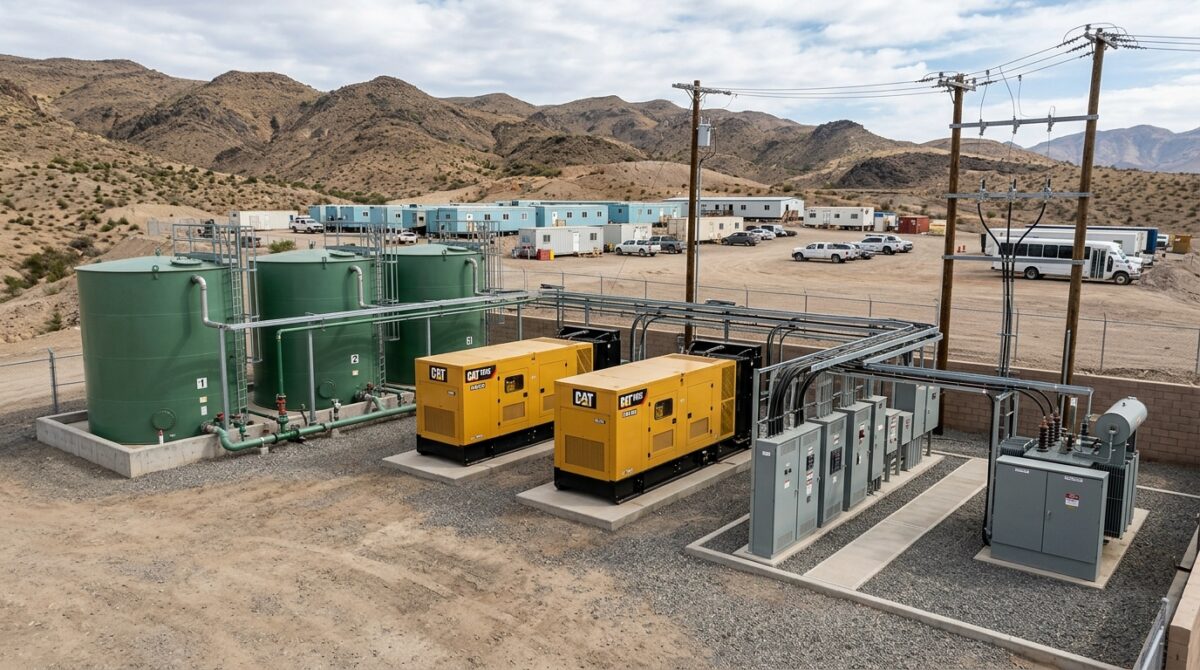
Building a construction camp in a remote location is an engineering project in itself. Miles from the nearest town, with no municipal utilities and limited road access, the camp must function as a self-contained community—providing power, clean water, waste management, and comfortable living conditions for hundreds of workers around the clock.
This guide covers the essential infrastructure systems that every remote construction camp needs to operate safely, efficiently, and in compliance with federal and state regulations.
Power Generation and Distribution
Reliable electricity is the backbone of every camp system. Without it, nothing else works—no HVAC, no lighting, no kitchen equipment, no water treatment.
Key considerations for camp power systems:
- Load calculation: Start with a detailed load analysis. A 200-person camp typically requires 500-800 kW of generating capacity, depending on climate and amenities. Include housing HVAC, kitchen equipment, water treatment, laundry, lighting, and a 20-25% safety margin.
- Redundancy: N+1 generator configurations ensure that if one unit fails, the camp continues operating. For critical systems (medical, fire suppression), consider dedicated backup circuits.
- Fuel logistics: Diesel generators at remote sites consume 15-25 gallons per hour per 100 kW. A 200-person camp might burn 2,000-3,500 gallons daily. Plan fuel delivery routes, storage capacity (minimum 7-day supply), and spill containment.
- Distribution: Step-down transformers, distribution panels, and properly rated wiring to every building. All electrical work must meet NEC standards and be inspected before occupancy.
- Efficiency: LED lighting, programmable thermostats, and load management systems can reduce fuel consumption by 15-20%—a significant savings when diesel is trucked to remote locations.
Water Supply and Treatment
Clean water is non-negotiable. OSHA requires potable water for drinking, cooking, and personal hygiene. A remote camp has three potential water sources:
| Source | Treatment Required | Capacity Considerations |
|---|---|---|
| Groundwater well | Filtration, UV/chlorine disinfection, testing | Best for long-term camps; requires hydrogeological survey |
| Surface water (river, lake) | Multi-stage filtration, flocculation, disinfection | High volume but requires complex treatment |
| Trucked water | Storage tanks, chlorine maintenance | Most common for camps under 12 months; expensive for large crews |
Water consumption planning: allow 50-75 gallons per person per day (drinking, cooking, showers, laundry, sanitation). A 200-person camp needs 10,000-15,000 gallons daily. Storage should hold a minimum 3-day supply.
Water quality testing must occur at least weekly (daily for surface water sources), with records maintained for health department review.
Wastewater and Sewage Management
What goes in must come out. Remote camps generate significant wastewater that must be treated before discharge or hauled off-site:
- Packaged treatment plants: Self-contained wastewater treatment systems that can handle 5,000-50,000 gallons per day. These produce effluent clean enough for surface discharge (with permits) or subsurface disposal.
- Septic systems: Suitable for smaller camps (under 100 persons) with appropriate soil conditions. Require percolation testing and health department approval.
- Holding tanks and pump-out: The simplest but most expensive ongoing option. Tanks are pumped regularly and waste is trucked to approved treatment facilities.
Environmental compliance is critical. Improper wastewater handling can result in EPA enforcement actions, project shutdowns, and six-figure fines. Work with environmental engineers familiar with the specific state and federal regulations governing your site.
Sanitation and Hygiene Facilities
OSHA standards (29 CFR 1910.142) set minimum requirements for sanitation facilities in temporary labor camps:
| Facility | OSHA Minimum Ratio | Best Practice Ratio |
|---|---|---|
| Toilets | 1 per 15 workers | 1 per 10 workers |
| Urinals | 1 per 25 workers | 1 per 15 workers |
| Showers | 1 per 10 workers | 1 per 8 workers |
| Handwash stations | 1 per toilet/urinal | Additional stations at dining entry |
| Laundry machines | No OSHA standard | 1 washer per 25 workers |
Hot water is often the bottleneck. Size your water heating system for peak demand—shift changes when 100+ workers want showers simultaneously. Tankless commercial water heaters or large storage tanks (500+ gallons) with rapid recovery are essential.
Kitchen and Dining Infrastructure
On-site food service is both a major operational system and a key factor in worker satisfaction. A remote camp kitchen must be designed as a commercial food operation:
- Equipment: Commercial ranges, ovens, fryers, walk-in coolers and freezers, prep tables, dishwashing systems. Size for 3 meals daily plus a grab-and-go snack bar.
- Storage: Dry goods storage for 2-week supply (longer in winter or for very remote sites). Refrigerated storage for 1-week supply of perishables.
- Dining seating: Seat 35-40% of total camp population simultaneously. Stagger meal times across shifts to manage capacity.
- Food safety: Commercial kitchen ventilation, grease traps, handwashing stations, and temperature monitoring. Health department inspections apply to camp kitchens just as they do to restaurants.
- Supply chain: Food delivery logistics for remote locations require advance planning. Establish relationships with regional distributors and plan for weather-related delivery delays.
Communications and IT
Modern workers expect connectivity, and camp operations depend on it:
- Internet: Satellite internet (Starlink or similar) for remote locations; cellular boosters where coverage exists. Plan for 5-10 Mbps per 50 workers for basic use, more if streaming is permitted.
- Phone: Cellular boosters, VoIP over satellite, or dedicated landline for emergencies.
- Camp management systems: Digital check-in/out, room assignments, maintenance requests, meal tracking. These systems improve operational efficiency and provide documentation for compliance.
- Emergency communications: Satellite phones and two-way radios as backup for areas with unreliable cellular coverage.
Safety and Emergency Systems
A remote camp must be self-sufficient for emergency response:
- Fire protection: Smoke detectors in every occupied space, fire extinguishers per code, emergency lighting and exit signage. Large camps need fire suppression systems and on-site water supply for firefighting.
- Medical: First aid station at minimum, staffed by a certified EMT. Camps over 200 persons or more than 1 hour from a hospital should consider an on-site paramedic or nurse.
- Evacuation: Written evacuation plans, posted routes, regular drills. Muster points must be clearly marked and lit.
- Weather monitoring: For camps in tornado, hurricane, or severe storm zones, weather monitoring systems and hardened shelter areas are essential.
- Security: Perimeter fencing, access control (badge or biometric), security lighting, and 24/7 monitoring for large camps.
The infrastructure systems described here represent the minimum for a safe, compliant, and productive remote camp. Each project site presents unique challenges—permafrost foundations in Alaska, extreme heat in the desert Southwest, flood-prone lowlands along the Gulf Coast—that require specialized engineering solutions.
RIM Camping designs, builds, and operates fully integrated camp infrastructure tailored to your project’s specific location, climate, duration, and workforce size. From initial site assessment through final demobilization, our team ensures every system meets or exceeds regulatory requirements while keeping your crew comfortable and productive.