

The True Cost of Inadequate Worker Accommodations on Job Sites
January 5, 2026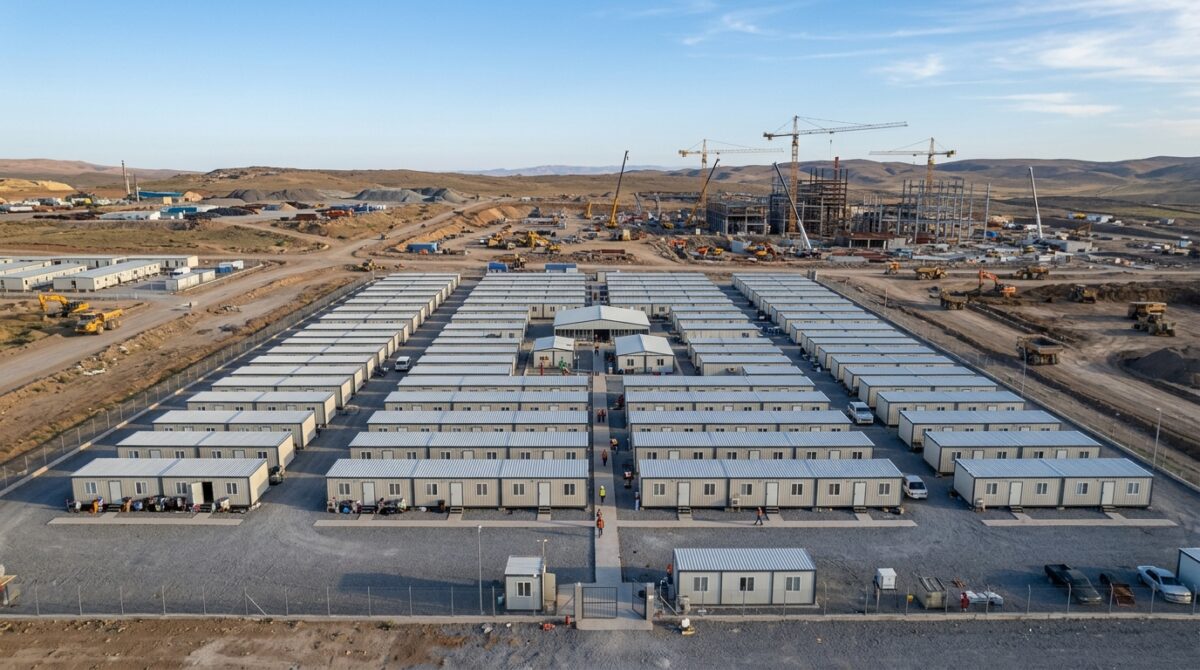
Large-scale construction projects—whether pipeline expansions, power plant builds, or highway overhauls—often require hundreds or even thousands of workers deployed to locations far from urban centers. Providing reliable, comfortable temporary workforce housing is not just a logistical challenge; it directly impacts worker productivity, safety, retention, and ultimately the project’s bottom line.
At RIM Camping Inc, we have supported major infrastructure projects across the United States with turnkey camp solutions that keep crews rested, fed, and focused. In this guide, we walk through the critical planning steps every project manager should follow when setting up temporary workforce housing.
1. Assess Your Workforce Numbers and Timeline
Before selecting a housing solution, you need precise answers to several foundational questions:
- Peak headcount: What is the maximum number of workers on-site at any given time? Include contractors, supervisors, and support staff.
- Project duration: Is this a 3-month sprint or a 2-year marathon? Duration affects whether you lease modular units, build semi-permanent structures, or use a hybrid approach.
- Shift patterns: If crews rotate in 12-hour shifts, you may need fewer beds than total headcount—but common areas, dining, and sanitation must handle overlap periods.
- Ramp-up schedule: Most projects don’t start at full capacity. Plan for phased deployment of housing units to avoid paying for empty beds during mobilization.
A detailed workforce loading chart—showing headcount by week or month—is the single most valuable planning document for temporary housing. Share it with your workforce housing provider early so they can stage equipment accordingly.
2. Evaluate the Site and Its Constraints
Every project site presents unique challenges. A thorough site assessment should cover:
| Factor | What to Evaluate | Impact on Housing |
|---|---|---|
| Terrain | Flat, sloped, rocky, marshy | Foundation requirements, grading costs, drainage |
| Access roads | Width, weight limits, distance from highway | Delivery of modular units, supply logistics |
| Utilities | Proximity to power grid, water, sewer | Generator sizing, water trucking, septic systems |
| Climate | Temperature extremes, precipitation, wind | HVAC requirements, insulation, weatherproofing |
| Regulations | Local zoning, environmental permits, BLM land | Setbacks, waste disposal methods, occupancy limits |
Remote sites with no utility connections require self-contained camps with generators, water treatment, and waste management—a specialty that turnkey providers like RIM Camping handle end-to-end.
3. Choose the Right Housing Configuration
Temporary workforce housing comes in several forms, each with trade-offs:
- Modular sleeper units: Factory-built rooms (typically 8’x20′ or 12’x40′) with beds, climate control, and storage. The gold standard for comfort and speed of deployment. Most units accommodate 2-4 workers per room.
- Containerized housing: Converted shipping containers offering durability in harsh environments. Slightly more spartan but extremely weather-resistant and stackable for compact footprints.
- Canvas/soft-wall structures: Tent-based solutions for short-duration or rapidly changing sites. Lower cost but limited climate control and less privacy.
- Existing structures: Repurposed warehouses, schools, or hotels near the site. Can work for suburban projects but rarely available in truly remote locations.
For projects lasting more than 6 months with 100+ workers, modular sleeper units almost always offer the best combination of cost efficiency, worker satisfaction, and regulatory compliance.
4. Plan Supporting Infrastructure
Housing units are only part of the equation. A functional camp requires an ecosystem of supporting infrastructure:
- Kitchen and dining: Commercial kitchen facilities sized for your headcount, with proper food storage, prep areas, and dining seating for at least 40% of peak occupancy at once.
- Sanitation: Shower and restroom facilities meeting OSHA ratios (1 toilet per 20 workers, 1 shower per 10 workers). Hot water capacity is often the bottleneck.
- Laundry: Industrial washers and dryers—plan for 1 washer per 25-30 workers.
- Recreation: TV rooms, gym equipment, Wi-Fi, outdoor seating. Worker retention on remote projects is directly tied to quality of life during off-hours.
- Medical: First aid station at minimum; large or remote camps may need an on-site medic or clinic.
- Security: Access control, perimeter fencing, check-in/check-out systems.
5. Budget Realistically
Temporary workforce housing costs vary widely based on location, duration, and amenity level. A realistic budget should account for:
| Cost Category | Typical Range (per worker/day) | Notes |
|---|---|---|
| Housing unit lease | $45–$85 | Includes delivery, setup, removal |
| Meals (3 per day) | $35–$65 | On-site kitchen vs. catering |
| Utilities (power, water, waste) | $15–$30 | Higher for off-grid sites |
| Housekeeping and maintenance | $10–$20 | Daily cleaning, linen service |
| Transportation | $8–$15 | Camp-to-jobsite shuttles |
All-in costs of $120–$200 per worker per day are typical for well-run remote camps. This may sound steep, but compare it to the alternative: hotel stays at $150+/night plus $75+/day per diem plus lost productivity from long commutes.
6. Partner with an Experienced Provider
The difference between a smooth-running camp and a logistical nightmare often comes down to your housing partner’s experience. Look for providers who offer:
- End-to-end service: site preparation through decommissioning
- Scalability: ability to add or remove units as headcount changes
- 24/7 on-site management and maintenance
- Compliance expertise: OSHA, state health codes, environmental regulations
- Proven track record with projects of similar size and scope
RIM Camping provides fully customized workforce housing solutions tailored to your project’s specific requirements—from initial site assessment through final demobilization. Our team has supported projects ranging from 50-person maintenance crews to 2,000+ worker mega-camps.
7. Plan for Demobilization from Day One
A frequently overlooked aspect of temporary housing is the exit strategy. Your contract should clearly define:
- Site restoration requirements and responsibilities
- Equipment removal timeline and logistics
- Environmental remediation if needed (fuel storage areas, septic systems)
- Phased reduction matching your workforce drawdown schedule
Planning demobilization upfront prevents costly surprises at project closeout and ensures you leave the site in compliance with landowner and regulatory requirements.
Temporary workforce housing is a significant investment—but when planned correctly, it pays dividends in worker productivity, safety, and project schedule adherence. Start early, plan thoroughly, and partner with experts who understand the unique demands of construction workforce logistics.
